
The Arab
(2026)
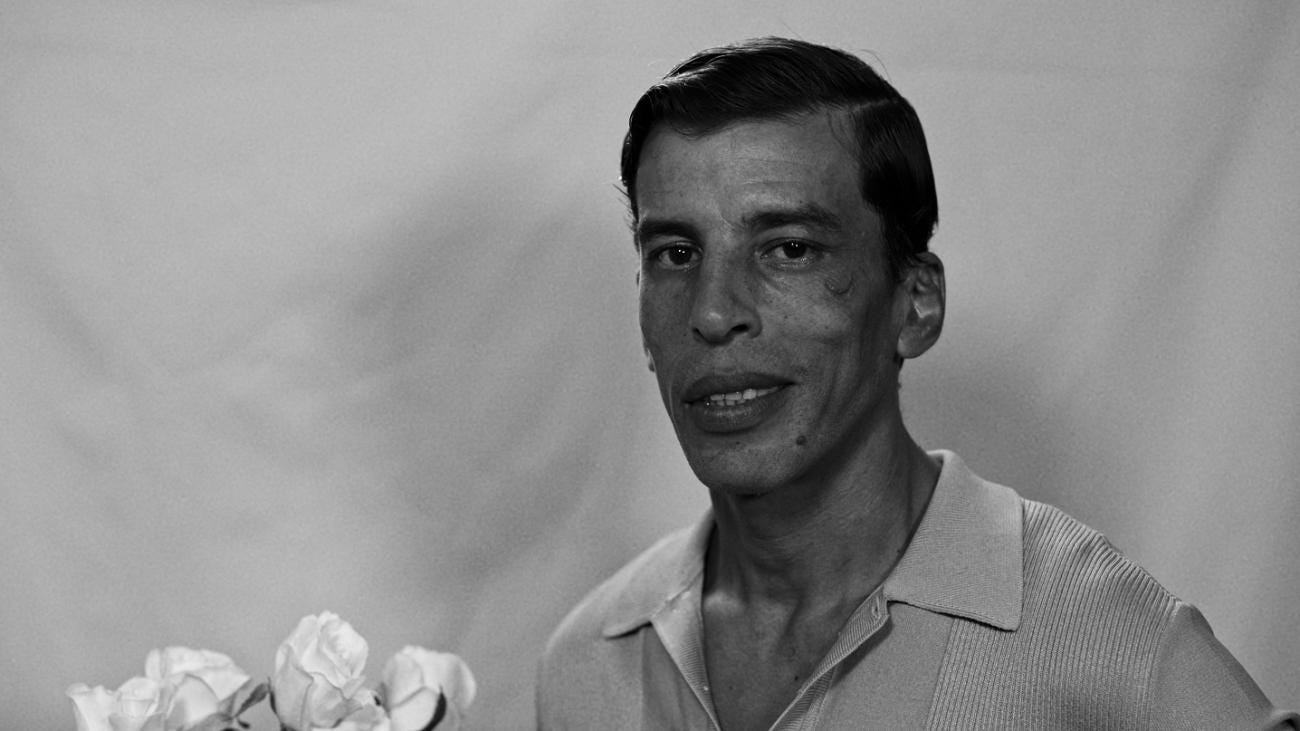
The past year has seen a sudden resurgence of interest in Albert Camus’s 1942 novel, The Stranger, the Ur-text of existentialism and classical French ennui, with François Ozon’s vivid cinematisation of its barebones plot, its ambiguities rife with metaphorical potentialities, about a Frenchman living in colonial Algiers who murders an Arab native on the beach one afternoon for no apparent reason, illuminating the international festival circuit. It screened at this year’s International Film Festival Rotterdam, alongside a much better film that re-imagines Camus’s novel from the perspective of the nameless victim.
Malek Bensmaïl’s The Arab is itself an adaptation of a novel by Algerian writer Kamel Daoud, 2013’s The Meursault Investigation, a rambling first-person account told by the victim’s brother to a nameless stranger in a bar. To Daoud’s narrative, Bensmaïl adds a key character, who takes the part of that nameless stranger: Kamel (Nabil Asli), a journalist notorious for his opinionated, anti-establishment commentary in one of the country’s leading newspapers – a dangerous position of defiance, as the film’s present backdrop is the Civil War that engulfed Algeria for the entirety of the 1990s.
Kamel spends his nights drowning his duress in the illicit watering holes of Oran. It is in one of them that he is approached by an older man named Haroun, played by the iconic Algerian actor Ahmed Benaissa in what would be his final role (he passed away in 2022 at the age of seventy-eight), with an extraordinary and unlikely story: that Camus’s novel is not a fiction. That the slain character referred to in the novel only as “the Arab” was, in fact, his older brother.
The second act is Haroun’s story: which, like Daoud’s novel, shadows Camus’s story of Meursault in perplexing and intriguing ways. One need not have read Daoud’s novel – or, for that matter, Camus’s – to pick up the main theme, which is rooted in Algeria’s own colonial narrative. Camus’s novel is essentially about Meursault’s relationship with his deceased mother (its opener, “Aujourd’hui, maman est morte”, is among the most famous in all modern literature); Daoud’s is about Haroun’s relationship with his own mother, very much alive and crazed by the tragic loss of her older son and haunted by a sense of injustice.
