
Olivia
(2026)
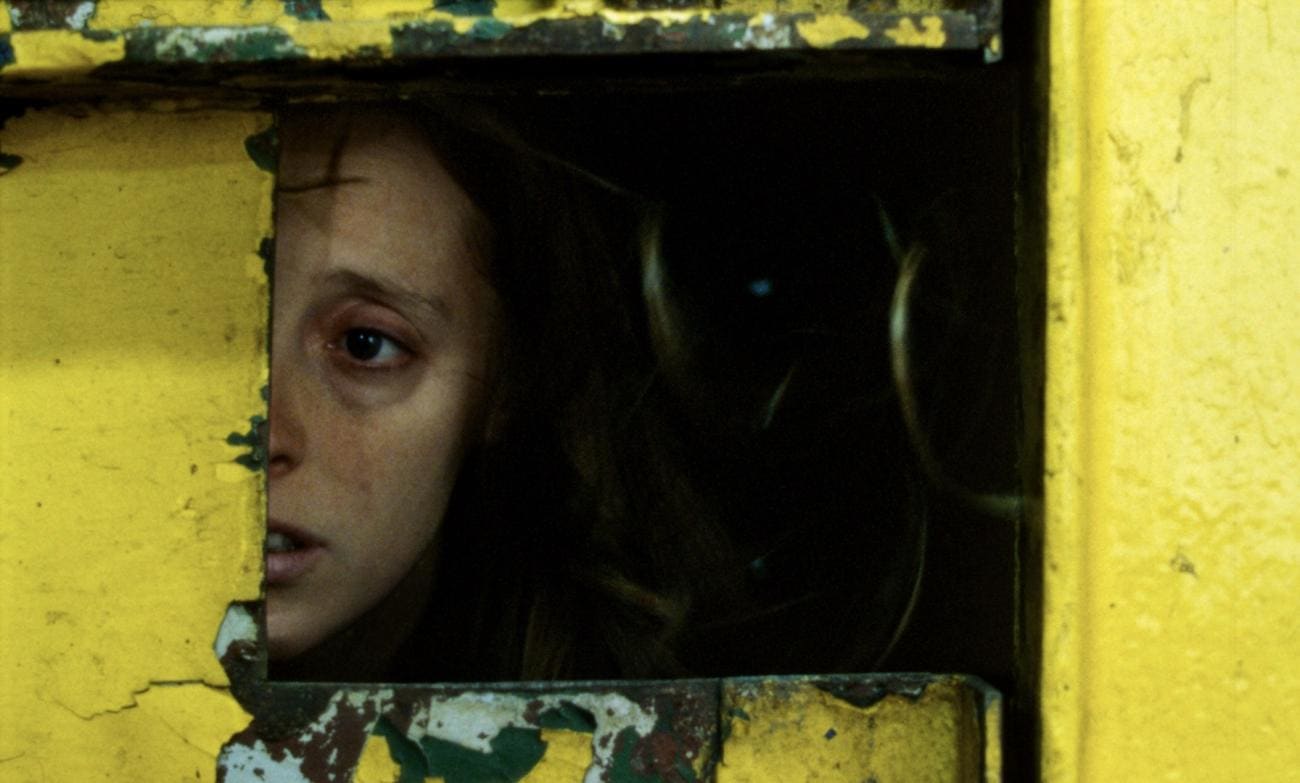
The opening shot of water on fire gives clear insight into the keen interest in elements – with elementality, really – that establishes Sofía Petersen’s authorial voice in Olivia, her debut feature. In a triangular house isolated in a stark Patagonian landscape, the titular character, played with a feral intensity by Tina Sconochini, lives alongside her father (Dario del Carmen Haro Santana), who works by day as a butcher in a slaughterhouse. Theirs is a simple, impoverished existence, not unlike that of a very similar cinematic pairing, in Bela Tarr’s final feature The Turin Horse (2011), which Petersen pays direct homage to in a re-creation of that film’s famed potato-eating scene. One day, her father suddenly and inexplicably disappears. Her searching for him forms the core of the narrative.
Olivia is not really tied down to narrative, however; Petersen’s approach is tethered to the visual and the affective in equal measure. Shot predominately at night, Olivia’s wanderings unfold with a horror movie-like creepiness that emerges as the film’s most compelling driver, in lieu of a strongly defined emotional arc. The colour correcting overdrive applied in post – the night sky is purple rather than blue, the yellows are acrid – illustrate the mania of Olivia’s inner world, though without much of a script, it is difficult to parse the origins of her malaise.
